How to Send Pet Booking Reminders to Reduce No-Shows and Improve Efficiency
Automated booking reminders are the most effective way to reduce no-shows and keep your pet service calendar full. By combining the right timing, clear messaging, and multi-channel delivery, businesses can recover thousands in lost revenue.
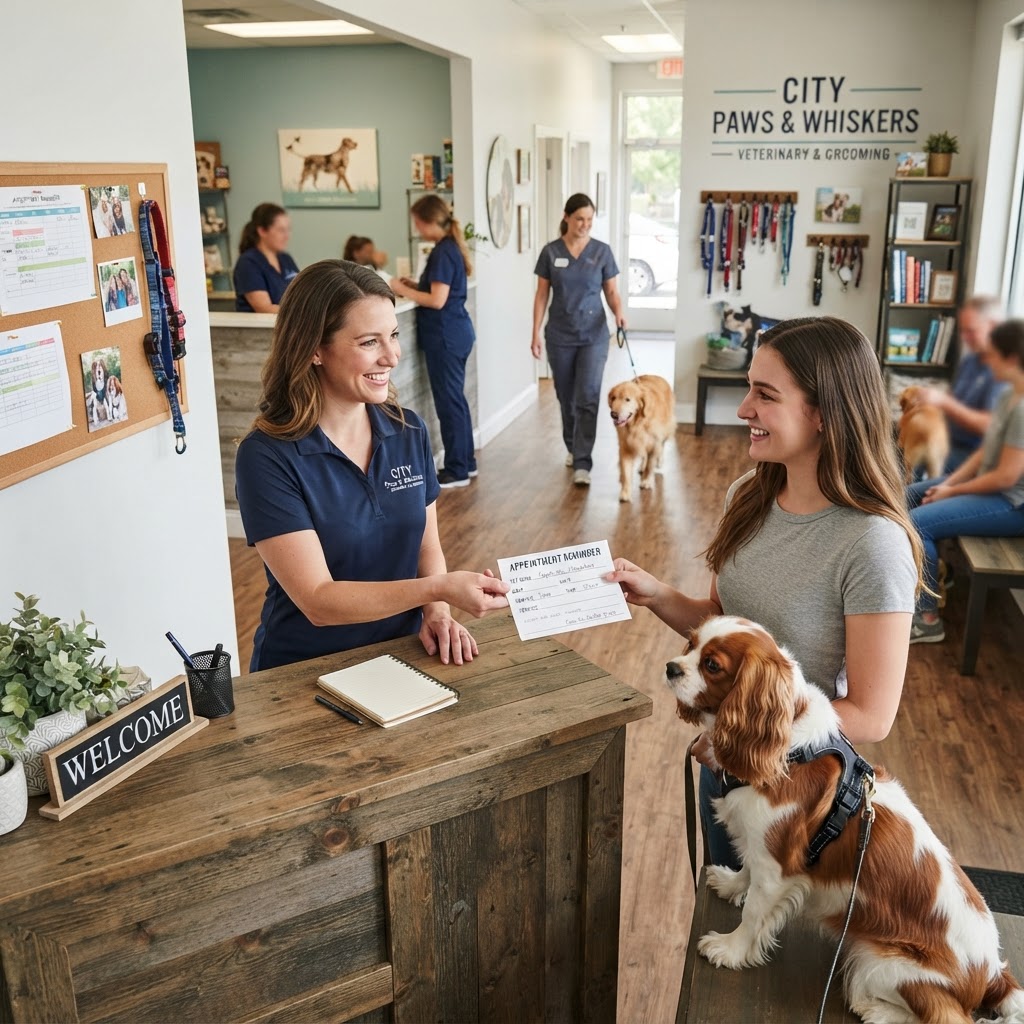
TL;DR: Missed appointments cost pet businesses thousands of dollars annually. To combat this, businesses should implement a multi-channel reminder strategy using both email (for detailed policies) and SMS (for immediate alerts). Sending a reminder 48 hours in advance allows time to refill cancellations, while a day-of text ensures clients don't forget. Automating this process through booking software eliminates manual admin work and drastically reduces no-show rates.
Table of Contents
- The Impact of No-Shows on Pet Businesses
- Best Practices for Timing Your Reminders
- Choosing the Right Communication Channel
- Crafting the Perfect Reminder Message
- Automating Your Workflow for Better Efficiency
- Frequently Asked Questions
The Impact of No-Shows on Pet Businesses
Why booking reminders are more than just a courtesy
In the pet service industry, an appointment is a perishable inventory item. When a client fails to show up for a grooming session, a dog walking slot, or a boarding stay, that time cannot be resold. According to industry data, the average no-show rate for veterinary and pet practices typically falls between 5% and 10% (How veterinary practices can reduce no-show rates). While this might sound small, the compounding effect on a small business is severe. Reminders shift the responsibility of remembering the appointment from the client's busy memory to an automated system, acting as a critical operational safeguard rather than just polite customer service.
The financial cost of missed pet appointments
To understand the true impact, consider a worked example for a mid-sized dog grooming salon. If a groomer charges an average of $80 per dog and experiences just three no-shows per week, the business loses $240 weekly. Over a 52-week year, that equates to $12,480 in lost revenue—often the equivalent of several months of rent or the cost of upgrading essential equipment. By implementing a robust reminder system, businesses can recover the vast majority of this lost income. Research indicates that fewer than 5% of appointments are canceled when consumers receive an SMS reminder (SMS Appointment Reminders Reduce No-Show Rate: Study).
Best Practices for Timing Your Reminders
The 48-hour rule for boarding and grooming
Timing is everything when it comes to appointment reminders. The industry standard for high-value or time-intensive services like grooming, training, and boarding is the 48-hour rule. Sending a reminder two days before the appointment serves a dual purpose: it gives the client ample time to confirm or cancel, and crucially, it gives your business enough time to contact clients on your waitlist to fill the newly opened slot. If you only remind clients 12 hours in advance, a cancellation becomes a guaranteed loss.
The day-of notification strategy
While the 48-hour reminder handles scheduling logistics, the day-of notification acts as a final prompt. This is typically a short SMS sent 2 to 4 hours before the appointment. It is especially useful for mobile pet services, dog walkers, and quick drop-off appointments where clients might simply lose track of time during their day.
Tailoring timing to specific services
Different pet services require different reminder cadences. Here is a recommended timing matrix based on service type:
| Service Type | First Reminder (Email) | Second Reminder (SMS) | Purpose |
|---|---|---|---|
| Pet Boarding | 7 Days Prior | 48 Hours Prior | Allows time for vaccination checks and packing. |
| Dog Grooming | 48 Hours Prior | 2-4 Hours Prior | Prevents no-shows and allows waitlist utilization. |
| Dog Walking | 24 Hours Prior | 1 Hour Prior | Ensures the dog is accessible and the owner is aware. |
| Mobile Services | 24 Hours Prior | When En Route | Confirms the client is home to receive the provider. |
Choosing the Right Communication Channel
Pros and cons of SMS vs. email
When deciding how to send reminders, businesses must weigh the benefits of email against SMS. Email is excellent for conveying detailed information, such as pre-appointment instructions, attached intake forms, and comprehensive cancellation policies. However, email open rates generally sit around 37% (SMS Appointment Reminders Reduce No-Show Rate: Study), meaning many clients may never see the message. SMS, on the other hand, is immediate and highly visible. Data shows that SMS reminders have the lowest no-show rate at 19%, outperforming both email and phone calls, and 64% of consumers appreciate receiving them (SMS Appointment Reminders Reduce No-Show Rate: Study).
| Feature | SMS Reminders | Email Reminders |
|---|---|---|
| Open Rate | Extremely High (Often 90%+) | Moderate (Approx. 37%) |
| Immediacy | Instant visibility on lock screens | Often buried in inboxes or spam |
| Content Length | Short, concise (160 characters) | Unlimited, supports rich formatting |
| Best Used For | Day-of alerts, quick confirmations | Intake forms, policy details, 48-hour notices |
Why multi-channel communication wins
The most effective strategy does not rely on a single channel. A multi-channel approach uses email for the initial 48-hour or 72-hour reminder—allowing space to outline cancellation fees and attach necessary waivers—and follows up with a concise SMS on the day of the appointment. This ensures that clients receive the necessary details without feeling overwhelmed by long text messages.
Crafting the Perfect Reminder Message

Essential details to include
A successful reminder message must be clear, actionable, and concise. Every reminder should include the client's name, the pet's name, the service booked, the date and time, the location (or a note that it is a mobile service), and a clear call-to-action (such as "Reply Y to confirm or call us to reschedule").
How to reinforce your cancellation policy professionally
Your reminder is the perfect place to gently but firmly remind clients of your cancellation policy. Instead of sounding punitive, frame it around mutual respect for time. For example: "Please note that cancellations within 24 hours will incur a 50% fee to compensate our staff."
Tone and brand voice in client communications
Maintain a friendly, professional tone that aligns with your brand. Pet businesses thrive on trust and warmth. Here are three worked examples of effective templates:
1. Standard Email Confirmation Template (48 Hours Out):
Hi [Client Name], this is a friendly reminder of [Pet Name]'s upcoming grooming appointment on [Date] at [Time]. Please ensure all vaccination records are up to date. If you need to reschedule, please let us know at least 24 hours in advance to avoid a cancellation fee. We look forward to seeing you!
2. Actionable SMS Template (Day-Of):
Hi [Client Name], [Pet Name] is scheduled for daycare today at [Time]. Reply Y to confirm or call 555-0199 to reschedule. See you soon!
3. Cancellation Policy Enforcement Template:
Hi [Client Name], we missed [Pet Name] at their scheduled appointment today. As per our policy, a no-show fee of [Amount] has been applied. Please contact us to settle this balance and reschedule. Thank you for understanding.
Automating Your Workflow for Better Efficiency
Moving from manual spreadsheets to automated systems
Manually texting or calling dozens of clients every day is an unsustainable administrative burden that pulls business owners away from actual pet care. Transitioning from manual spreadsheets to an automated system ensures that no client falls through the cracks, even during your busiest days.
Reducing admin time with integrated booking software
Modern pet businesses rely on integrated software to handle these workflows seamlessly. With online booking platforms like AnimalBooking, you can set up automated appointment reminders that trigger exactly when you want them to. AnimalBooking's system allows you to customize templates, utilize smart calendar sync to prevent double bookings, and maintain a comprehensive client CRM for communication history. By automating these touchpoints, you not only reduce no-shows but also reclaim hours of administrative time each week, allowing you to focus on scaling your business and providing excellent care.
Frequently Asked Questions
How do I handle clients who repeatedly miss appointments?
For chronic no-shows, implement a strict deposit policy requiring non-refundable upfront payment to secure a slot. If the behavior continues, it may be necessary to politely decline future bookings to protect your business's revenue.
Can I automate reminders if I offer mobile pet services?
Yes. Automated reminders are highly effective for mobile services. You can configure your software to send an SMS an hour before arrival, ensuring the client is home and the pet is ready for the service.
Should I charge a fee for missed appointments?
Yes, enforcing a cancellation or no-show fee is standard industry practice. It compensates your staff for their lost time and strongly discourages clients from missing future appointments. Ensure this policy is clearly stated in your initial booking confirmation and reminders.
Streamline your bookings with automated reminders
Reduce no-shows and save hours of admin time with AnimalBooking.
Streamline your bookings with automated remindersFrequently asked questions
How do I handle clients who repeatedly miss appointments?▾
For chronic no-shows, implement a strict deposit policy requiring non-refundable upfront payment to secure a slot. If the behavior continues, it may be necessary to politely decline future bookings to protect your business's revenue.
Can I automate reminders if I offer mobile pet services?▾
Yes. Automated reminders are highly effective for mobile services. You can configure your software to send an SMS an hour before arrival, ensuring the client is home and the pet is ready for the service.
Should I charge a fee for missed appointments?▾
Yes, enforcing a cancellation or no-show fee is standard industry practice. It compensates your staff for their lost time and strongly discourages clients from missing future appointments. Ensure this policy is clearly stated in your initial booking confirmation and reminders.
Sources & references
Related articles
How to Collect Pet Booking Deposits: A Guide for Animal Service Businesses
Last-minute cancellations and no-shows can devastate a pet business's bottom line. Implementing a clear, automated deposit policy protects your revenue while setting professional expectations with your clients.
How to Set Up Online Booking for Your Pet Business: A Step-by-Step Guide
Transitioning from manual scheduling to an online booking system reclaims lost hours and professionalizes your pet business. This guide walks you through structuring services, capturing intake details, and automating your workflow.
How to Take Online Payments for Pet Services: A Complete Guide for Business Owners
Transitioning from manual cash and bank transfers to automated online payments is the most effective way to secure your cash flow and eliminate no-shows. This guide breaks down how pet businesses can implement secure, integrated payment systems.